2026
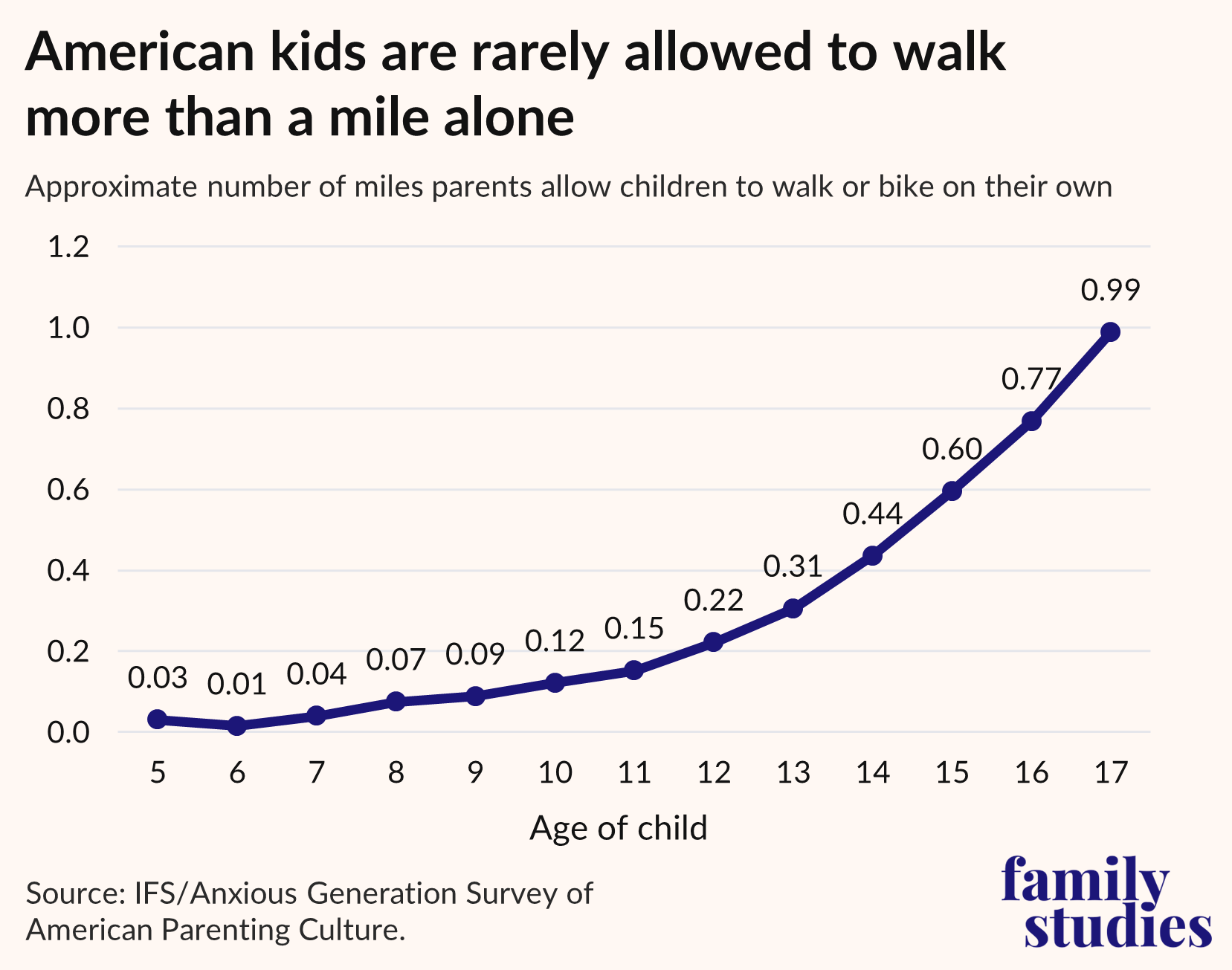
Most Kids Aren’t Allowed to Venture Far By Themselves
How far do you let your kid walk alone? A newly released report from IFS scholars Lyman Stone, Michael Toscano, and Ken Burchfiel shows how far parents allow their children to walk or bike unaccompanied. 14-year-old children are typically allowed to walk less than half of a mile from home. Even for 17-year-olds, most parents do not allow their child to walk more than a mile away from home. The report finds that children raised to be more independent, with greater freedom to venture from home alone, and less tech time have better mental health outcomes. At the same time, the authors find that parents are more likely to report that parenting is hard when raising their children in more independent and low-tech households.


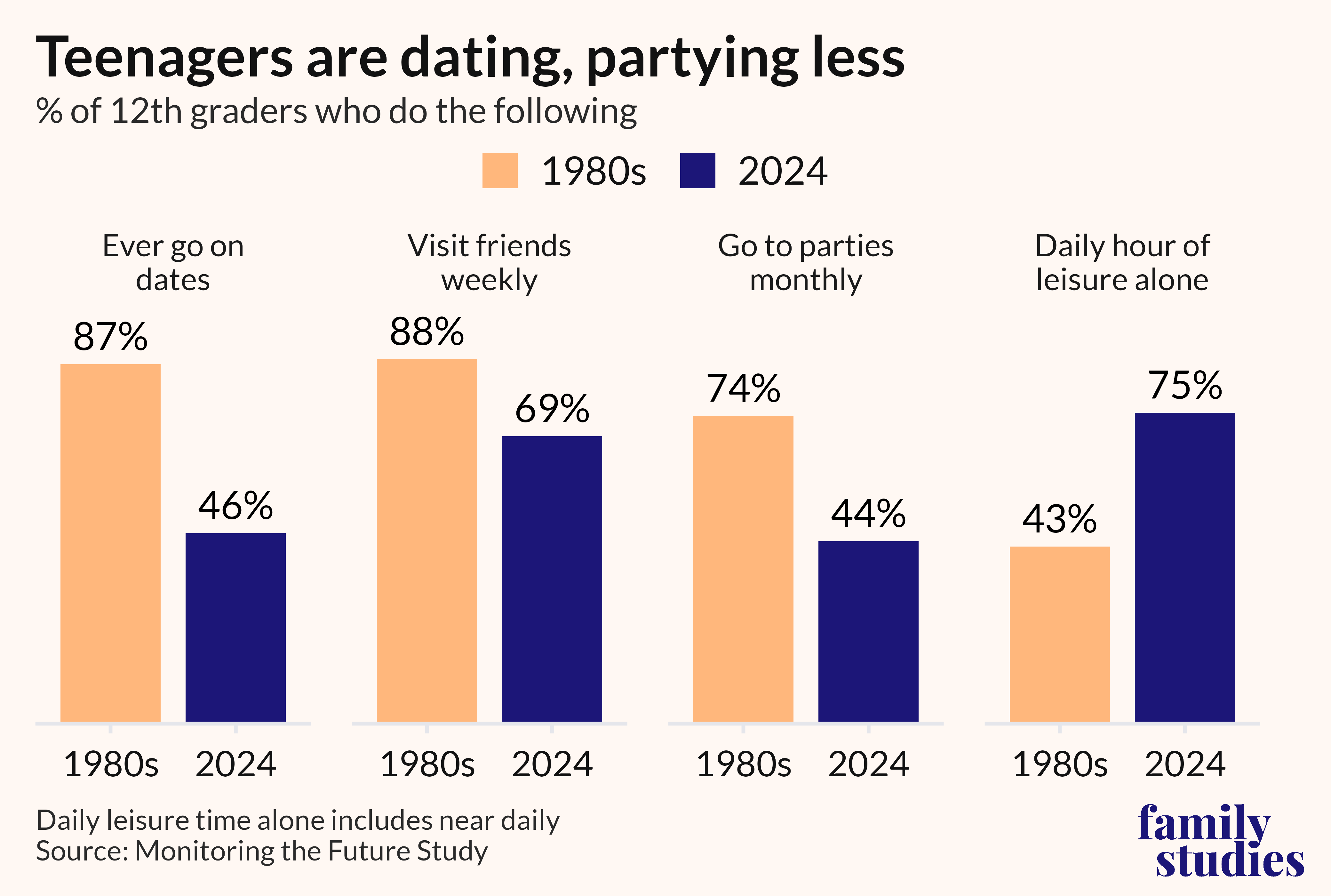
Teenagers Are Less Social than Decades Past
The social landscape among teenagers has changed drastically over the past four decades. American high schoolers are going out less and spending more time alone. In the 1980s, 88% of high school seniors reported visiting friends at least weekly. Just 69% of teens today report the same. Likewise, 74% of '80s teens reported going to parties at least monthly. Today, just 44% of high schooler report the same. What are modern American teens doing instead? Spending more time alone. Whereas 43% of high school seniors from the 1980s report spending an hour of leisure time alone daily or near daily, three-in-four today report this frequent time alone. All of this points to a broader retreat from social life among the rising generation.
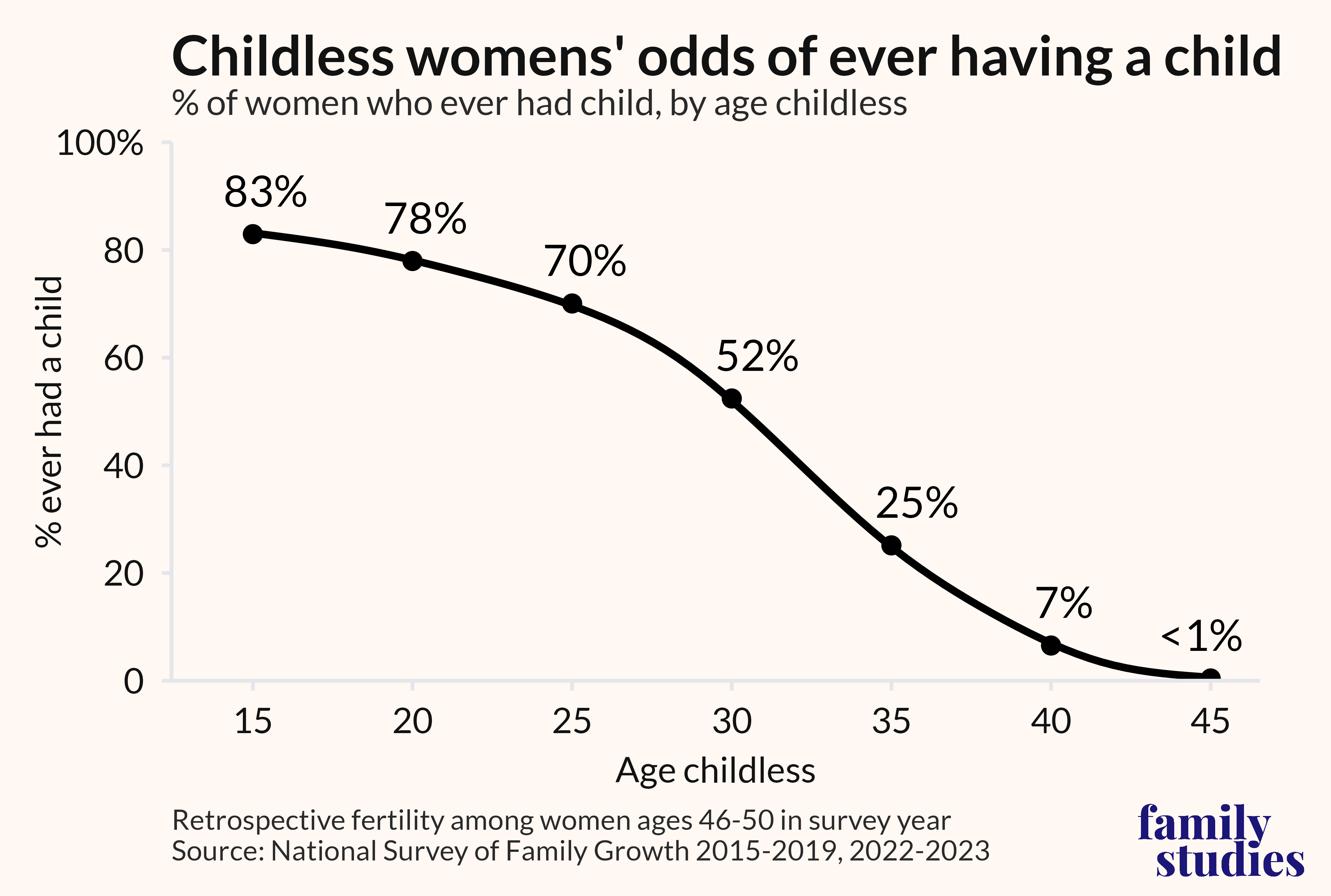
Half of women childless at 30 never had children
With young adults dating less and postponing marriage, many are hoping to get hitched and have babies down the road. But if historical data can teach us anything, many will be disappointed. It’s true that, historically, more than 4-in-5 women became mothers. But delayed motherhood may change this story. Retrospective data from women ages 46 to 50 in the National Survey of Family Growth show that just half of all women who were childless at the age of 30 went on to have children. First-time childbirth falls drastically through early 30s. Just a quarter of those who were childless at 35 went on to become mothers. And despite the low odds of later-in-life motherhood, a massive three-in-five 35-year-old women today say they hope to have children one day.
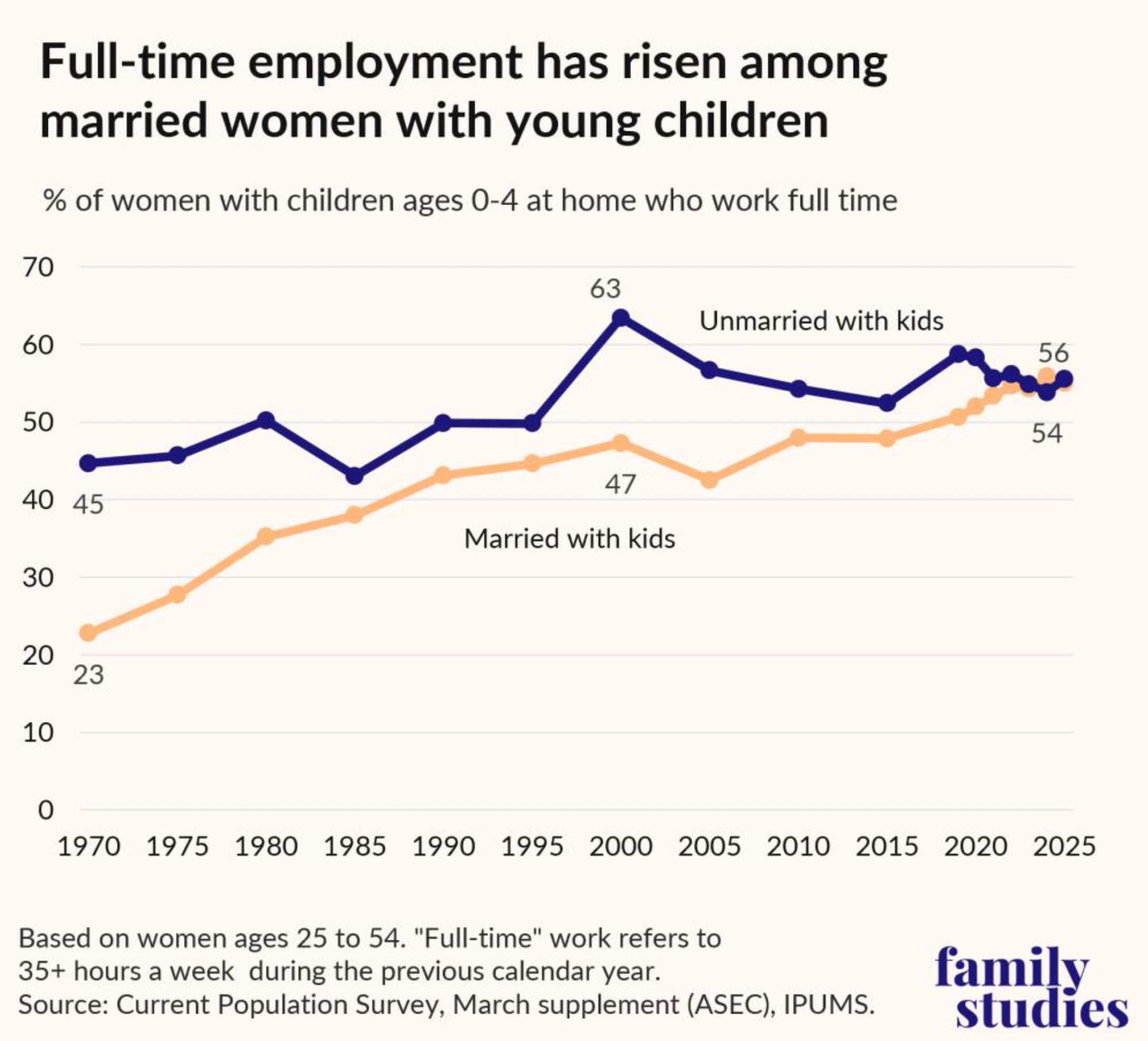
Majority of Married and Unmarried Mothers Work Full Time
How has full-time work among married and unmarried mothers compared historically? An IFS report by Wendy Wang and Jenet Erickson answers this question, finding that in 1970, nearly twice as many unmarried mothers of young children were working full-time compared to married mothers of young children. Through the rest of the twentieth century, this gap shrank until the mid- to late-90s, when full-time work among unmarried mothers spiked post-PRWORA, peaking at 63% in 2000. Since then, the shares of unmarried and married mothers working full time have converged, with both exceeding a majority. In 2024, for the first time more married mothers than unmarried mothers worked full time.
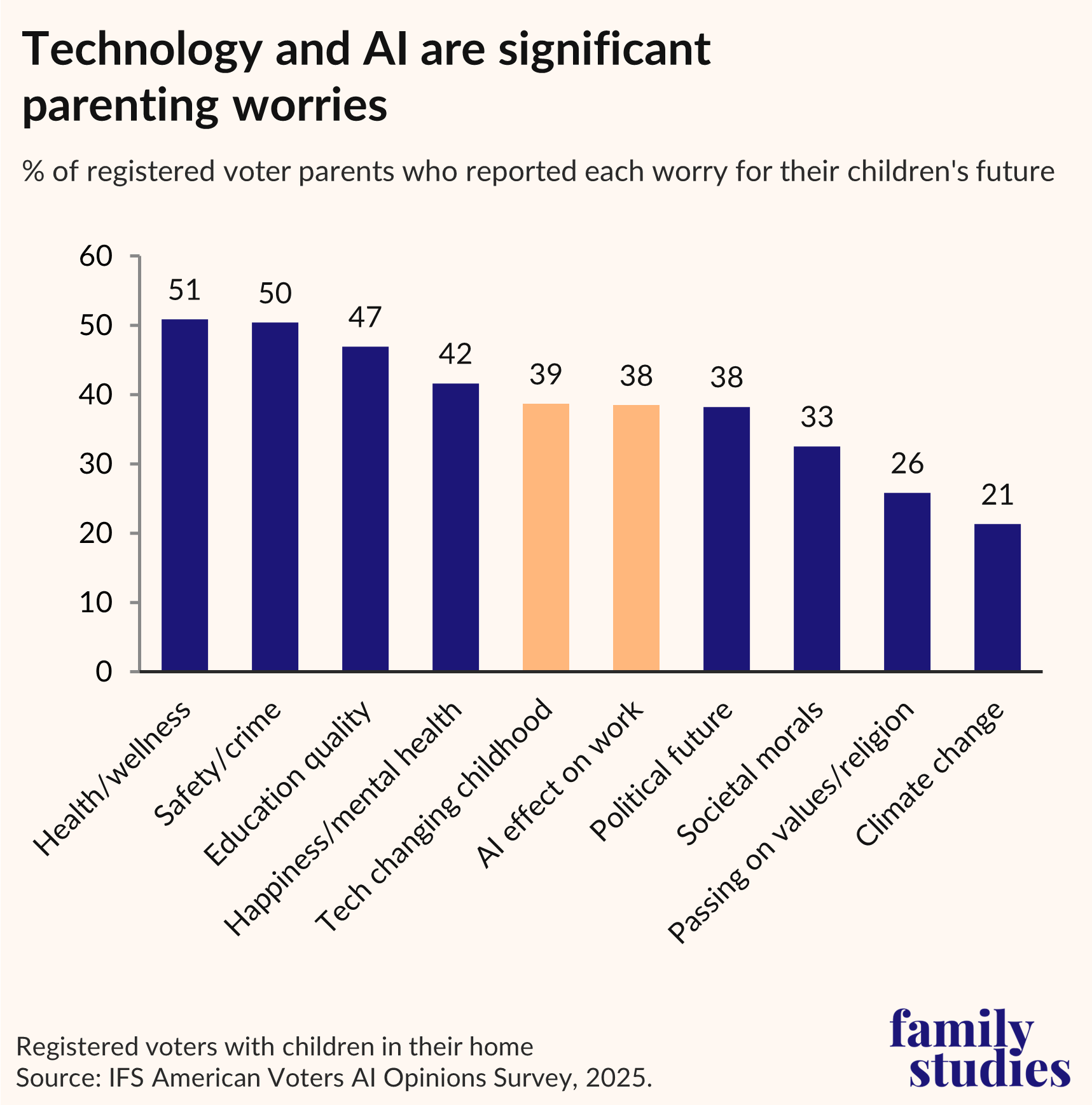
Parents More Worried About AI Than Climate Change
A 2026 IFS brief on artificial intelligence found that about 40% of parents are concerned about how AI will impact their children's careers. A similar share worry about how technology is changing childhood. American parents today are far more worried about technology than they are about how climate change might impact their kids. Likewise, they are more worried about tech than they are about failing to pass on their values to their children. While health, wellness, and educational concerns still predominate, it's worth realizing: AI concerns didn't exist at all six years ago. In a short window, an entirely new concern has landed on parents' plates.
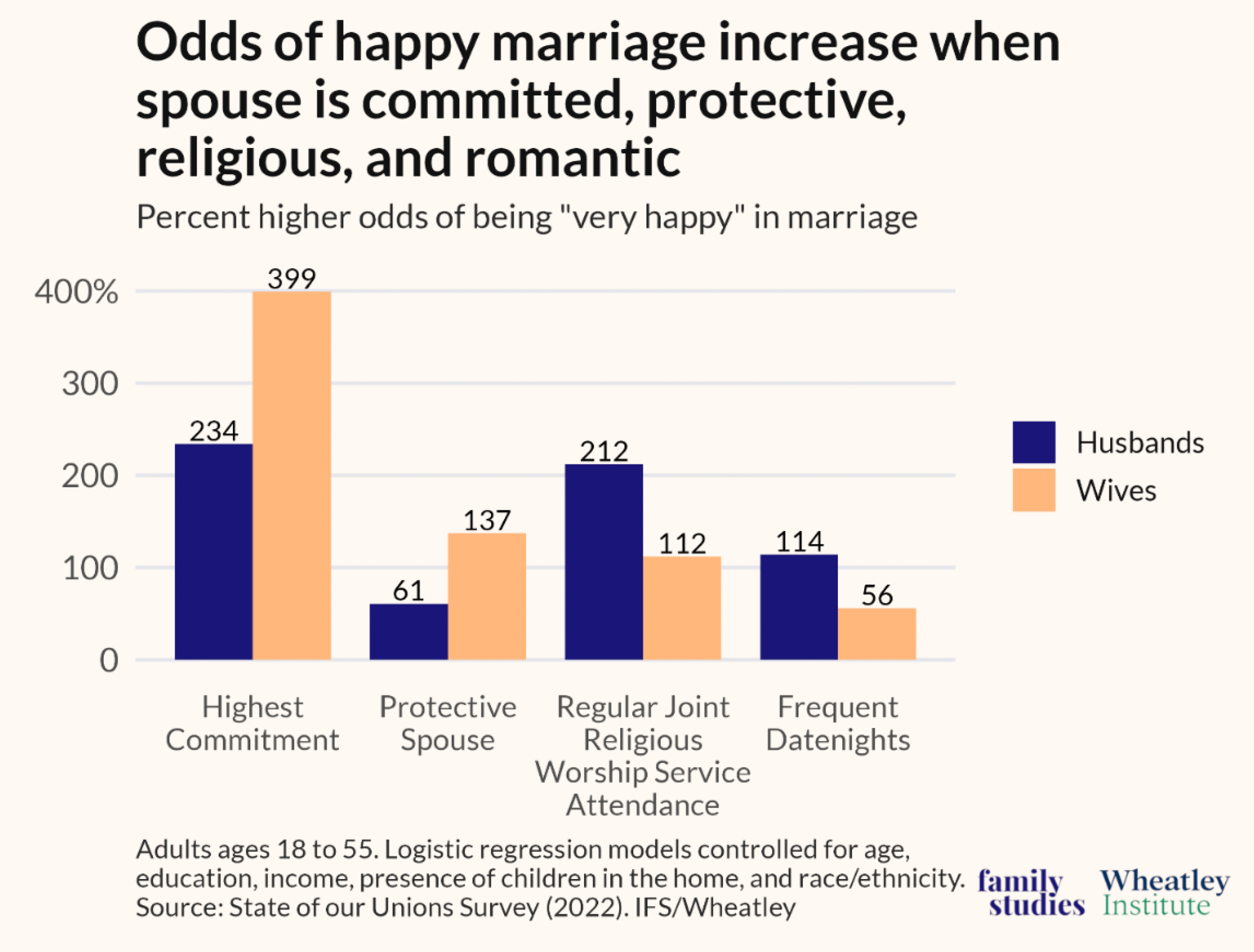
Joint Religious Attendance Triples Odds Of Marital Happiness For Men
For both husbands and wives, the primary predictor of marital happiness was high commitment toward their spouse, per a 2025 IFS/Wheatley report. Among husbands, completely agreeing that their marriage was one of the most important parts of their life was associated with a 234% increase in the odds of being very happily married, and a 399% increase for wives. The second most influential variable for husbands was consistent religious attendance with their spouse, increasing the odds of marital happiness by 212 percent. Notably, the effect of joint religious attendance on marital happiness was lower for women, but was still a significant predictor of marital happiness.
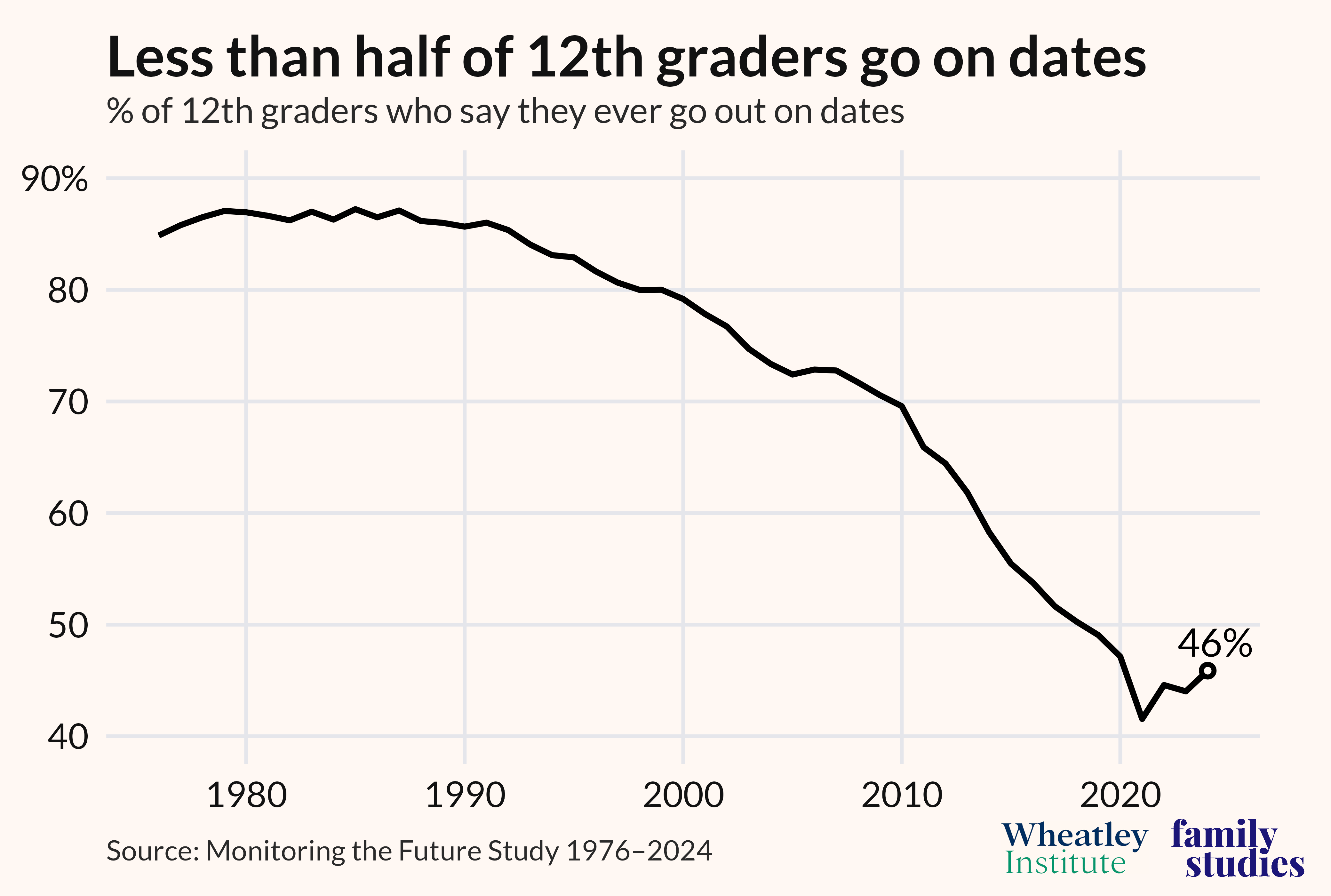
Less than half of high school seniors date
The 1980s were the high school dating decade. Nearly 9-in-10 high schoolers reported at least occasionally going out on dates, and about half of high schoolers went out at least weekly. But in the '90s, dating began to decline. This trend accelerated through the 2000s and 2010s, before bottoming out in 2021. In 2024, a mere 46% of high school seniors reported ever going out on dates, and just 1-in-5 went out weekly. While popular shows like Euphoria and Never Have I Ever depict widespread high school romance, the data shows that reality is quite different.
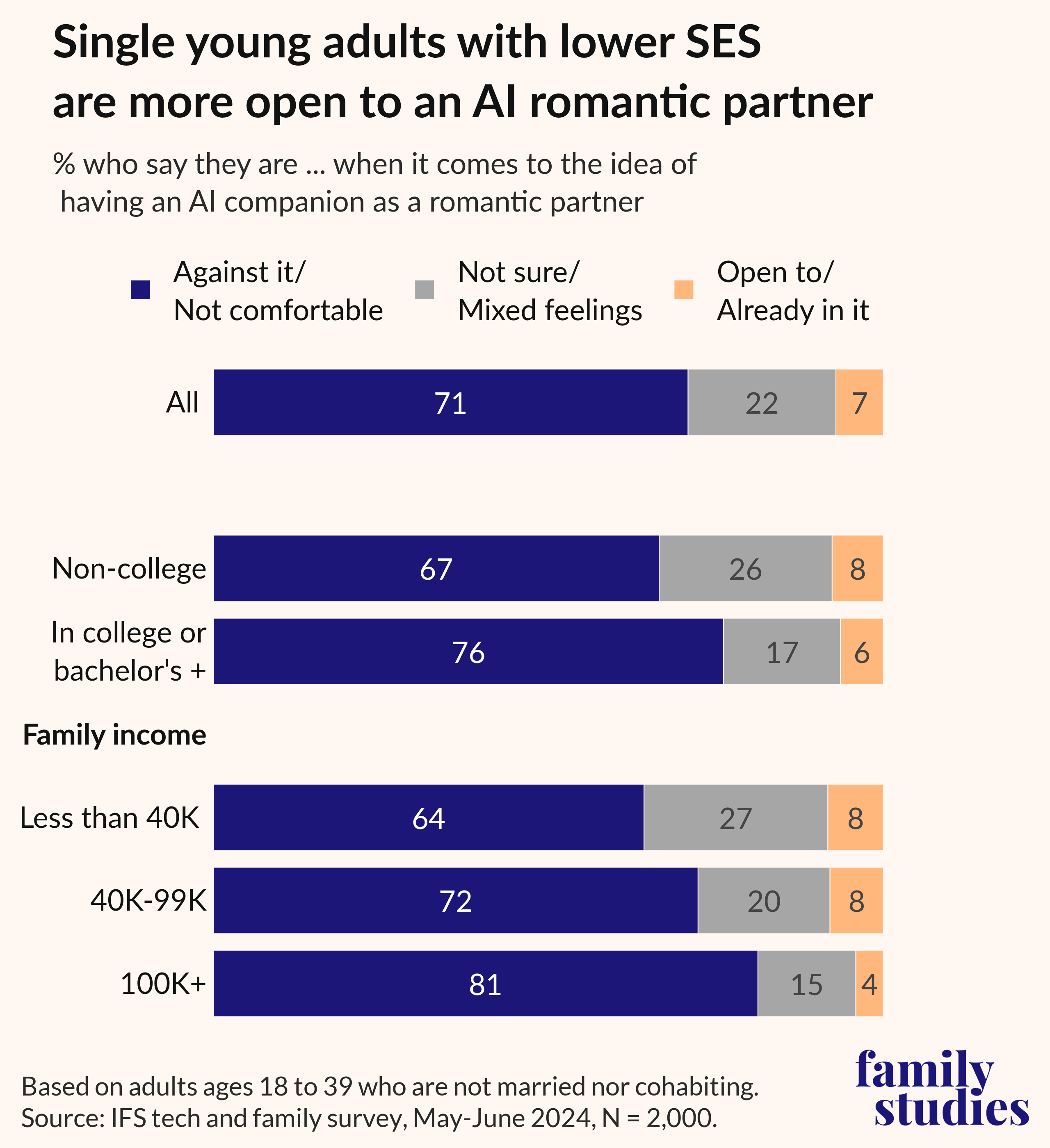
Higher-Income Americans are More Resistant to AI Romance
Poor and working-class Americans are less likely to marry than their peers with higher incomes and college degrees, and this class divide may be widening in the age of AI. According to a 2024 Institute for Family Studies survey of young adults ages 18 to 39, most single young adults are opposed to or uncomfortable with the idea of an AI romantic partner. But singles with lower income and education show less resistance. About six-in-10 single young adults with incomes under $40,000 say no to an AI partner, compared with 80% of those earning more than $100,000 per year.
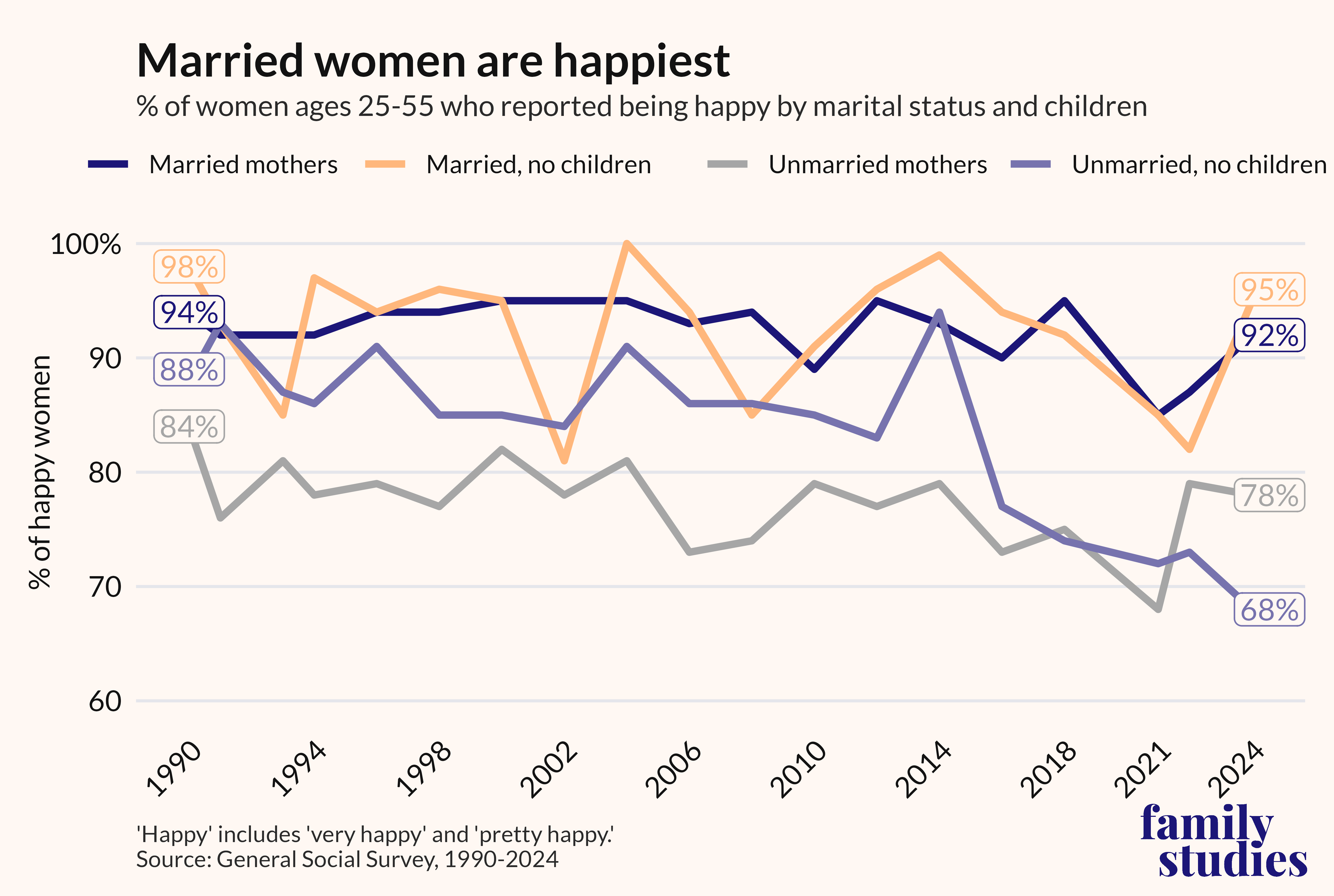
Married Women Are Increasingly Happiest
In the face of endless verbal battery against America’s oldest institution, new IFS research analyzing the General Social Survey (GSS) finds that the happiness premium for married women compared to unmarried women is not only large, but growing among prime-aged women. In 2024, the gap between married and unmarried women without children stood at a shocking 27-percentage points. A somewhat steady happiness trend through the 1990s and 2000s has since plummeted for unmarried childless women amidst the digital revolution of the last 15 years. Lacking the social, emotional, and economic protection that marriage provides, unmarried women, especially on the Left, have been uniquely victimized by the modern digital age.
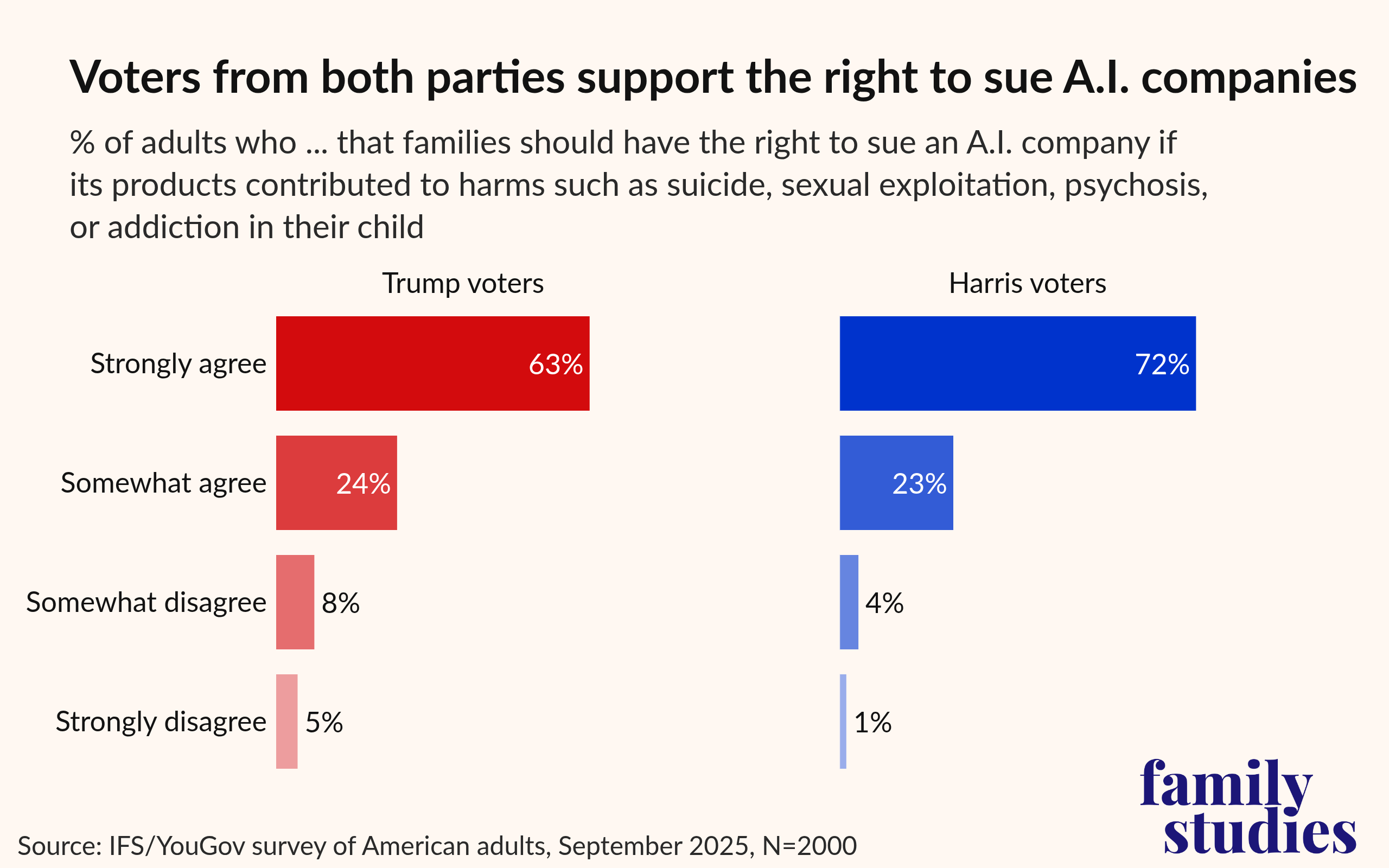
Bipartisan support for tech company accountability
Multiple tech giants are being sued in a bellwether trial in Los Angeles this week, which will determine whether they are legally responsible for harming children. The defendants argue that their platforms are exempt from legal liability. But what do Americans think? It turns out that Americans overwhelmingly support legal accountability for tech companies. A survey conducted by the Institute for Family Studies found that 90% of Americans agree that AI companies should be open to legal action if their products contribute to harms such as suicide, sexual exploitation, psychosis, or addiction among children. Such attitudes are bipartisan, with 87% of Trump voters and 95% of Harris voters agreeing that families should have the right to sue AI companies.